
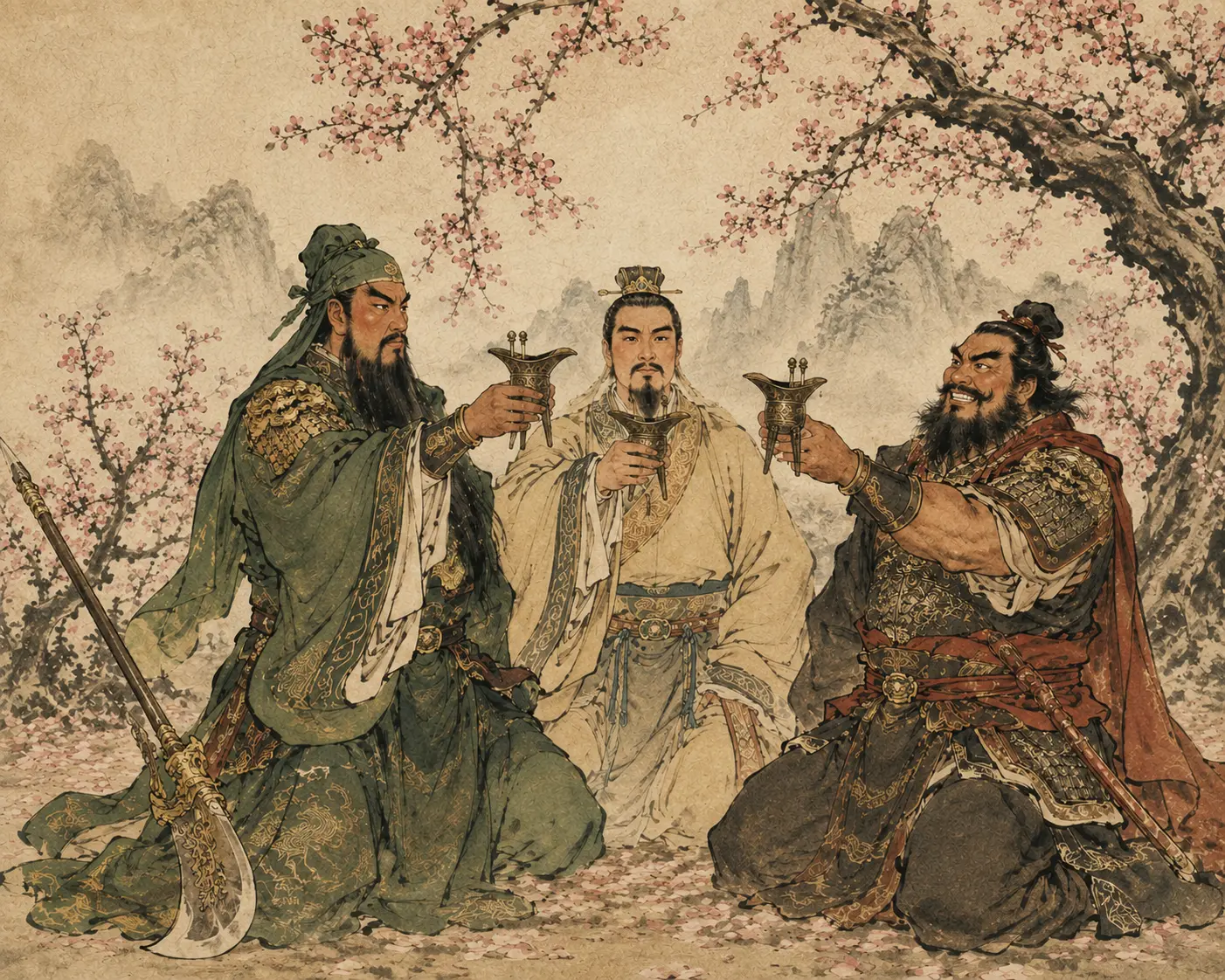
Where the legend began
Oath of the Peach Garden
桃園結義
In the spring of the Yellow Turban Rebellion, Liu Bei, Guan Yu, and Zhang Fei met beneath blossoming peach trees.
They burned incense to the heavens and earth, swore brotherhood, and pledged to uphold righteousness and aid the people.
From that day forward, they stood together — not as subjects or generals, but as sworn brothers.
Wine was their witness. Honor was their bond.
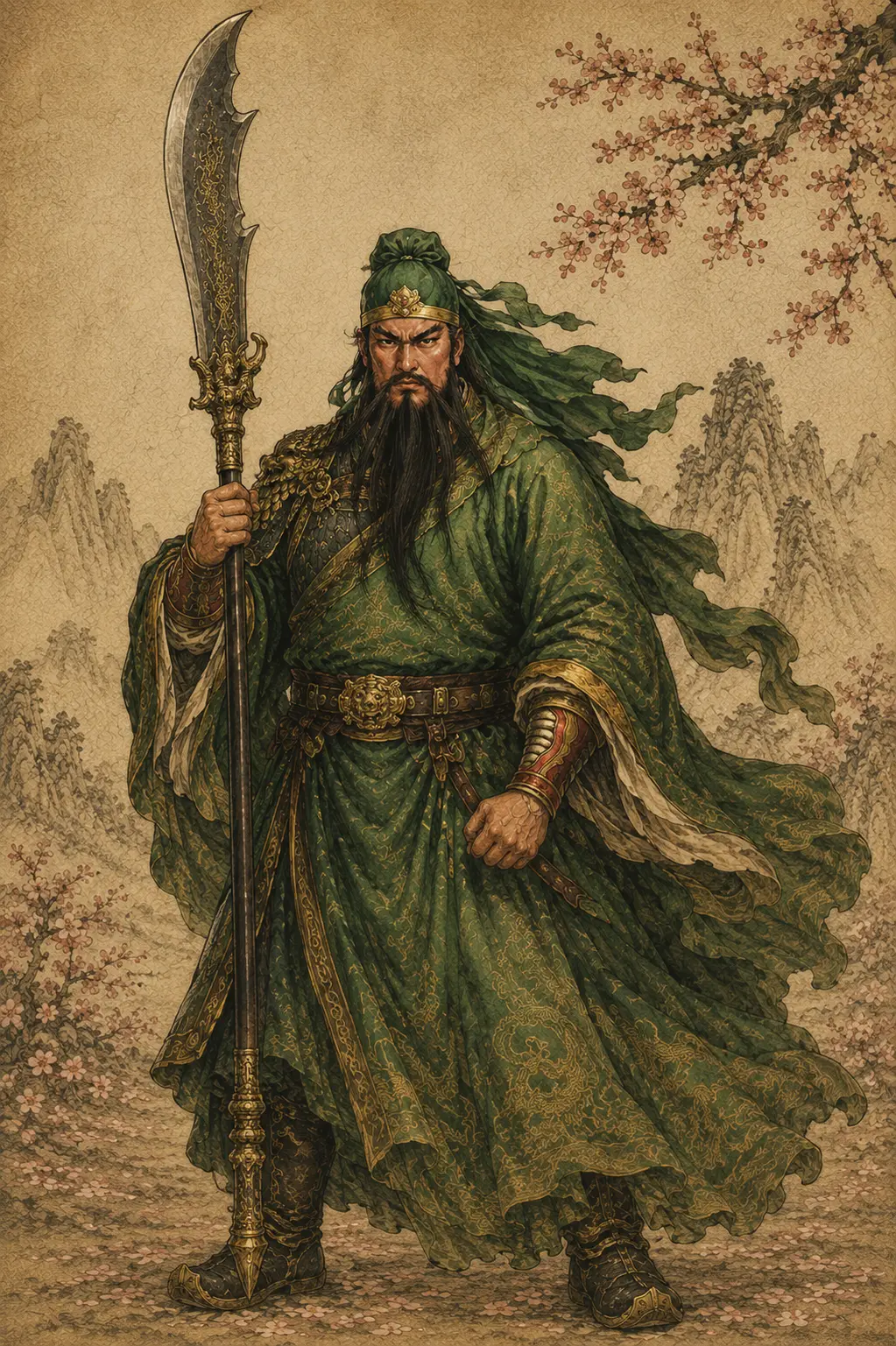
Guan Yu
關羽
The Saint of Loyalty
Guan Yu, courtesy name Yunchang, was the second brother — a general whose might was matched only by his integrity.
He swore that day to stand by Liu Bei through every trial and war, a promise he kept even when kingdoms tried to buy him from it.
That loyalty outlived him: he is worshiped today as a divine protector, in temples, homes, and restaurants alike.
Loyalty忠義無雙Unmatched in loyalty, then and now.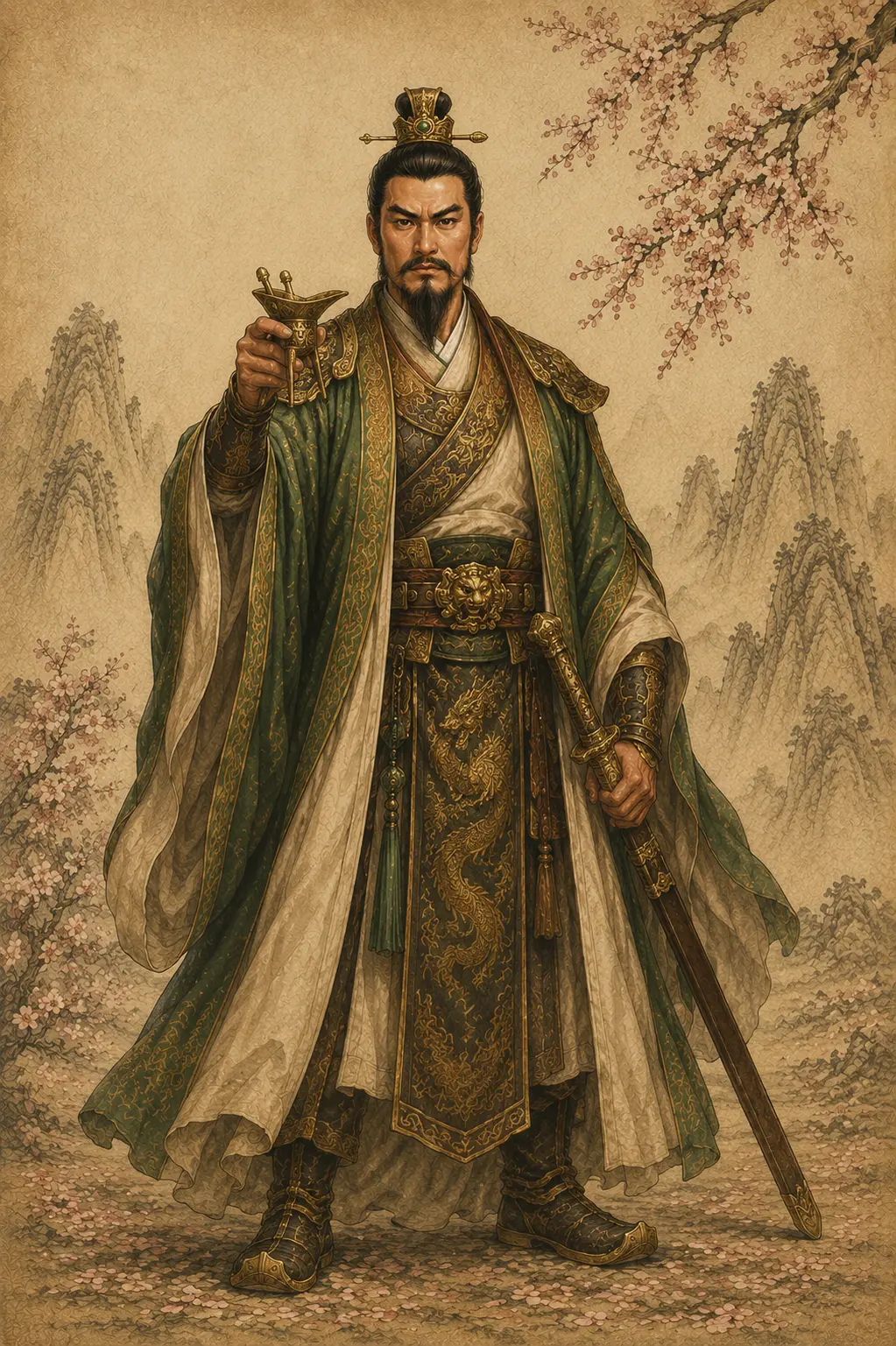
Liu Bei
劉備
The Benevolent Lord
Liu Bei, courtesy name Xuande, was the eldest of the three — a distant heir to the Han throne who had fallen to weaving mats and selling straw sandals before fortune found him.
He led not by strength of arms but by character, drawing men far mightier than himself into lifelong loyalty.
It was his cause — to shelter a broken dynasty and its people — that first brought Guan Yu and Zhang Fei to his side beneath the peach trees.
Benevolence寬仁厚德Led by character, not command.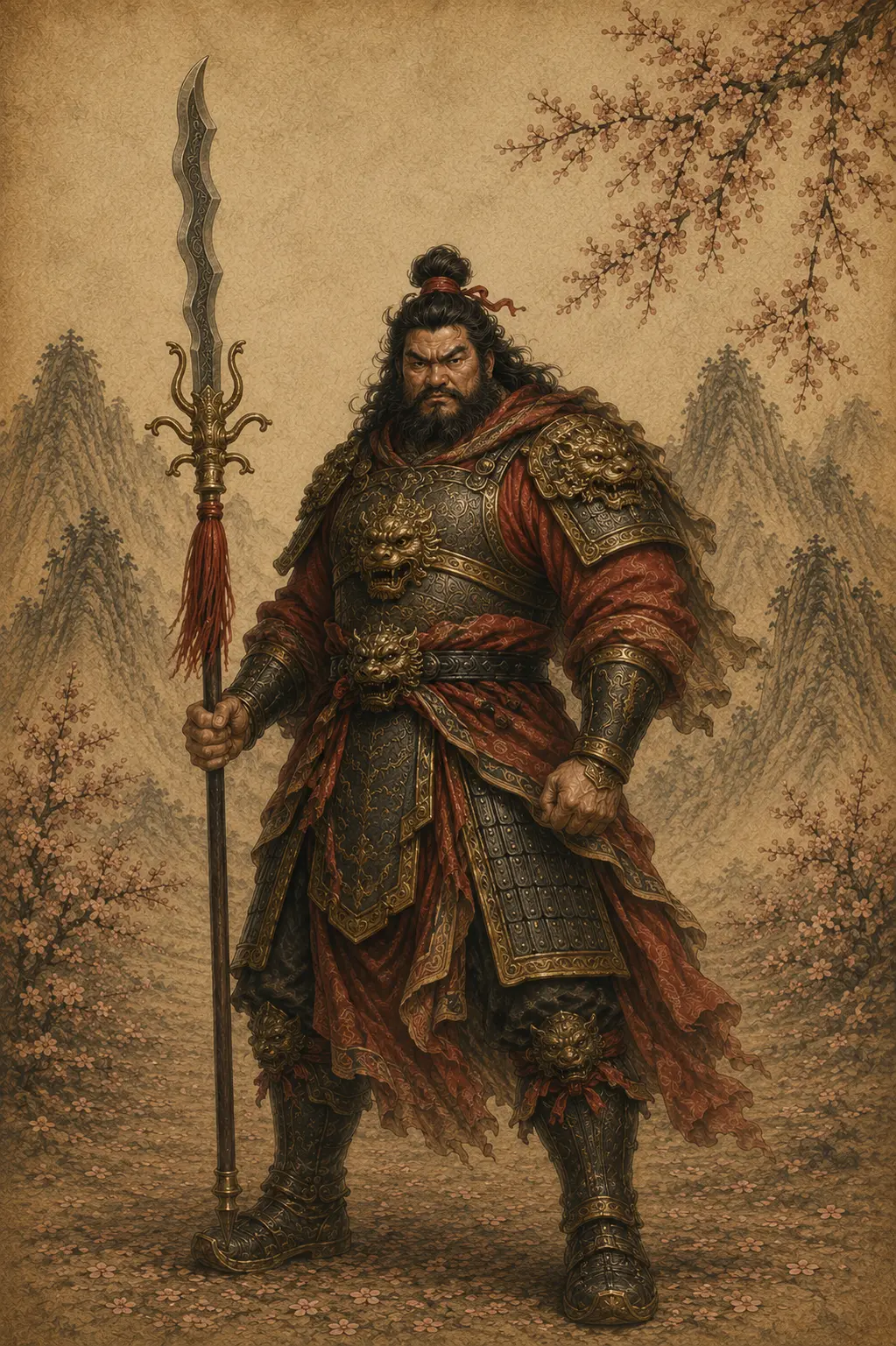
Zhang Fei
張飛
The Fierce General
Zhang Fei, courtesy name Yide, was the youngest of the three — a butcher and wine-seller whose temper was as famous as his strength.
He fought with a serpent spear and a battle-roar said to stop armies in their tracks, holding nothing back for the brothers he had sworn to protect.
History remembers him and Guan Yu together as wàn rén zhī dí — each a match for ten thousand men.
Ferocity萬人之敵A match for ten thousand men.
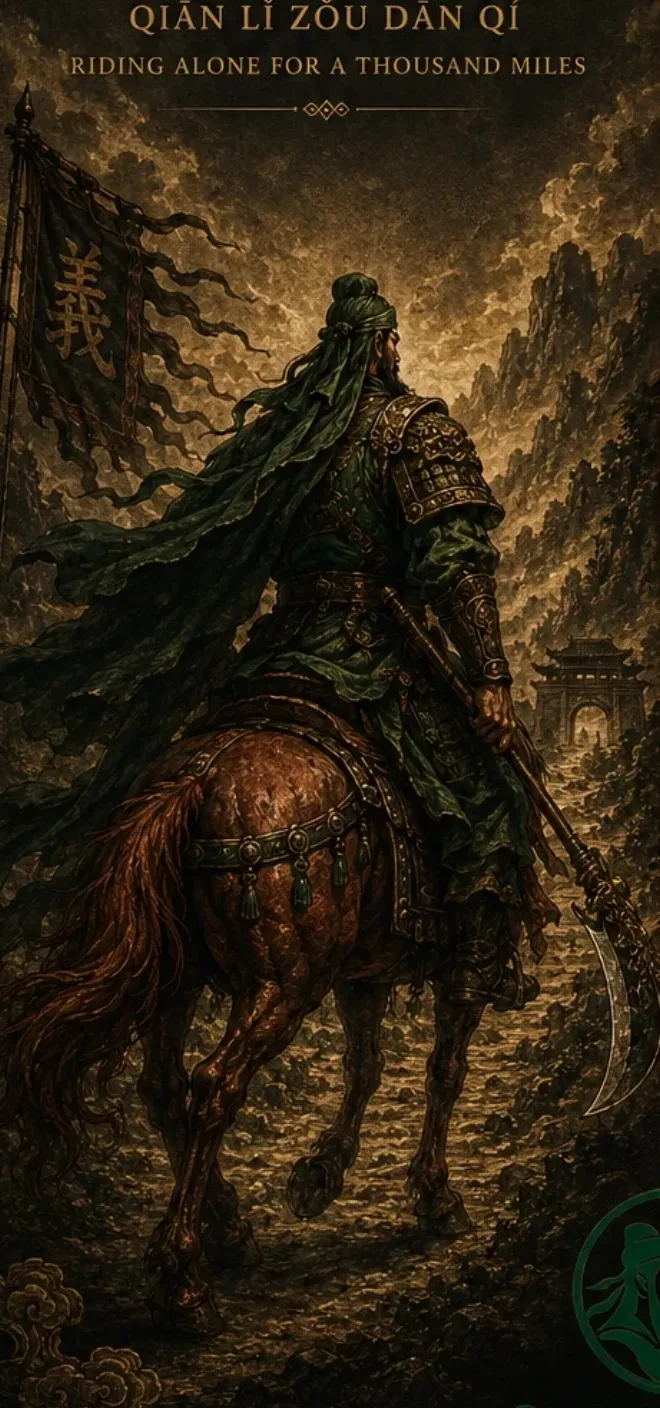
Qiān Lǐ Zǒu Dān Qí
Riding Alone For A Thousand Miles
千里走單騎
Cao Cao offered him gold, a residence, and a marquisate. He returned all of it and rode out to find his sworn brother.
曹操厚待關羽,
Though showered with wealth, titles, and honor by Cao Cao,
賜金銀、宅第、美女,
封漢壽亭侯。
然而關羽始終不忘劉備。
Guan Yu never forgot where his loyalty belonged.
得知兄長下落後,
When he learned of Liu Bei’s whereabouts,
他封金掛印,
he left behind rank and reward,
辭別曹操,
護送二位皇嫂,
escorted Liu Bei’s family to safety,
千里尋兄,
and rode alone for a thousand miles.
過五關,斬六將,
Passing five gates, defeating six pursuing generals,
終於與劉備重逢。
he ultimately reunited with the brother he had sworn to follow.
His journey became one of the most enduring symbols of loyalty in Chinese culture.
Guān Shèng Dì Jūn · 關聖帝君
Revered Through The Ages
千秋
From ancient times to today, Guan Yu is worshiped in temples, in homes, and in the hearts of millions. He represents the virtue of the gentleman, the strength of the warrior, and the loyalty that transcends time.
Protector
Guardian of the faithful
Warrior
Symbol of valor and might
Role Model
An example of virtue and honor
Cultural Icon
Enduring legacy in Chinese culture
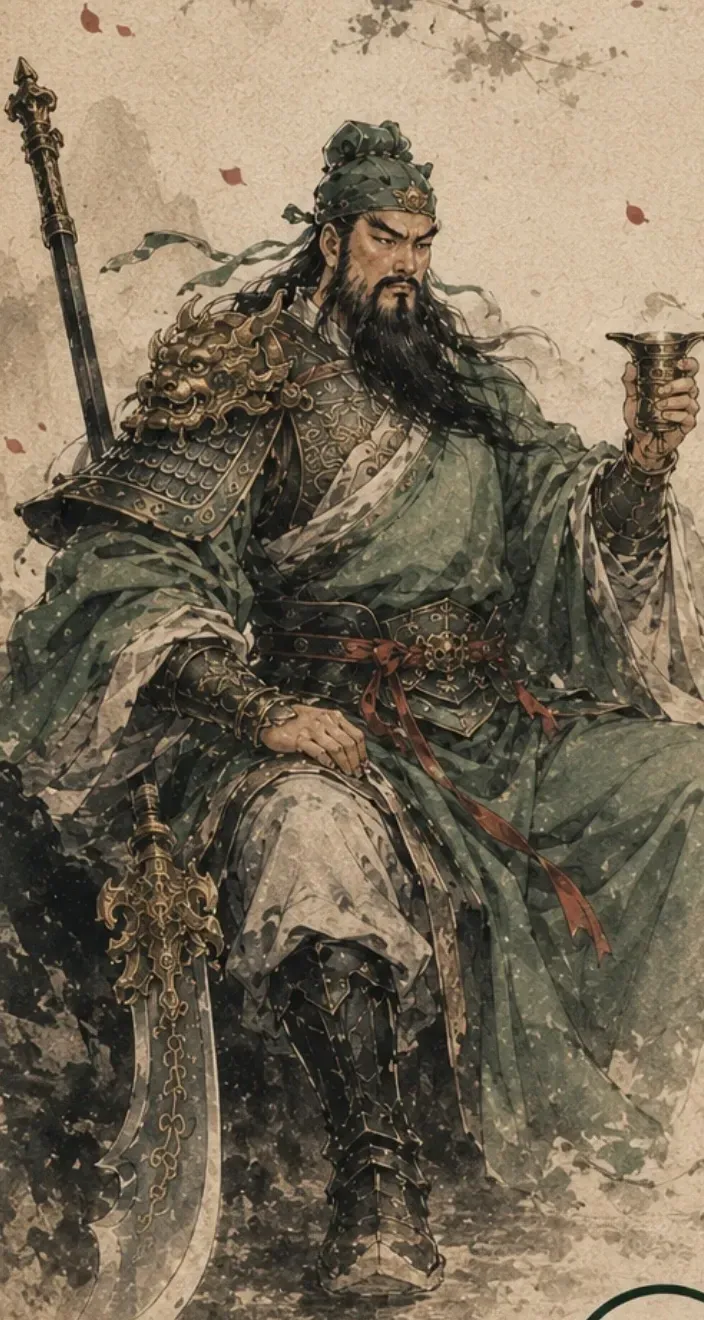
Lín Jiāng Xiān · Yè Dú Chūnqiū
臨江仙
— 夜讀春秋 —
- 滾滾長江東逝水,
- 浪花淘盡英雄。
- 是非成敗轉頭空。
- 青山依舊在,
- 幾度夕陽紅。
- 白髮漁樵江渚上,
- 慣看秋月春風。
- 一壺濁酒喜相逢。
- 古今多少事,
- 都付笑談中。
The mighty Yangtze flows eastward,
Waves that wash away all heroes.
Right and wrong, success and failure —
All turn to emptiness in the end.
The green hills remain as they were,
While the sunset glows red time and again.
White-haired fisherman and woodcutter
On the riverbank, accustomed
To the spring breeze and autumn moon.
Raise a cup of turbid wine,
How many tales of ancient and now —
All are but laughter in a conversation.
Yang Shen · the verse that opens Romance of the Three Kingdoms